Direction and extension are checked against the pattern and intended movement.
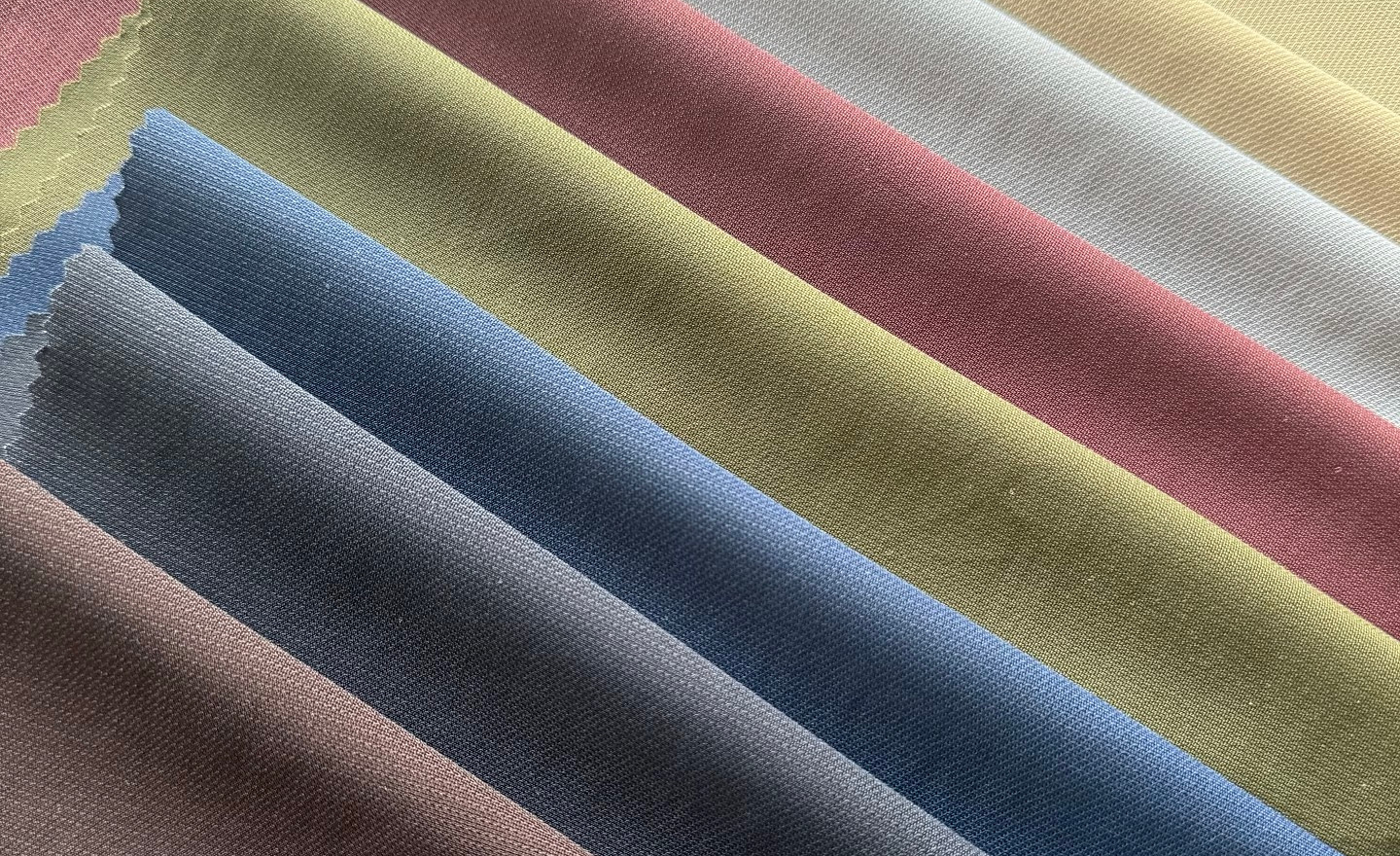
Fabrics & customization
Fabrics, lining and support for swimwear.
Compare material options around fit, coverage, movement and finish. Review the physical swatch, garment construction and documentation before approving a material for production.
Fabric development
Set the material requirements for your collection.
We commonly work with nylon, polyester and elastane stretch fabrics. Colors, prints, fabric weight and stretch requirements can be developed to suit the product brief, subject to material sourcing and sample approval.
Review the actual composition, weight, feel and lining combination before selection. Specific performance claims require evidence for the chosen material, not just a fiber name.
Share your fabric requirementsPerformance review
Start with how the swimwear will be used.
Stretch, recovery, coverage and support are evaluated against the selected construction and use. Chlorine, UV or recycled-content claims require documentation for the specific approved fabric.
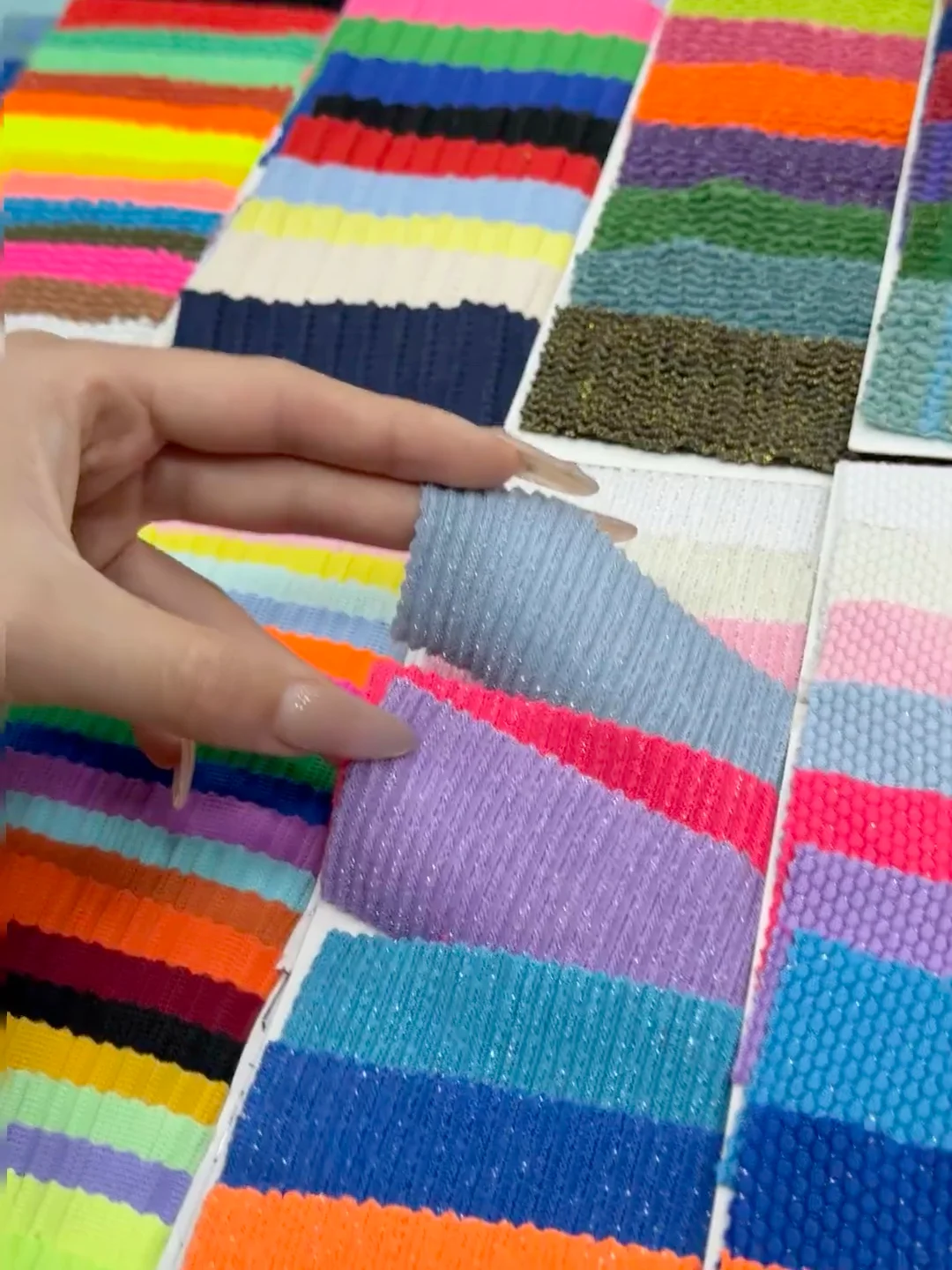
Compare the physical alternatives.
Review the selected article, shade, surface and stretch alongside its intended lining. Record the actual reference for your sample; a swatch view alone does not establish composition, weight or performance.
Review whether the fabric and elastic return without leaving the garment loose or distorted.
Shell color, wet appearance and lining influence opacity and coverage.
Material route
Shell & lining
Review composition, fabric weight, knit, stretch direction, recovery, opacity and hand feel using the actual swatch and intended garment. Compare shell and lining together under the planned fit and coverage.
Best evaluated withTarget silhouette and lining
ApprovalPhysical swatch or sample
ClaimsDocumented for the selected material
ColorApproved physical standard
Material route
Support structures
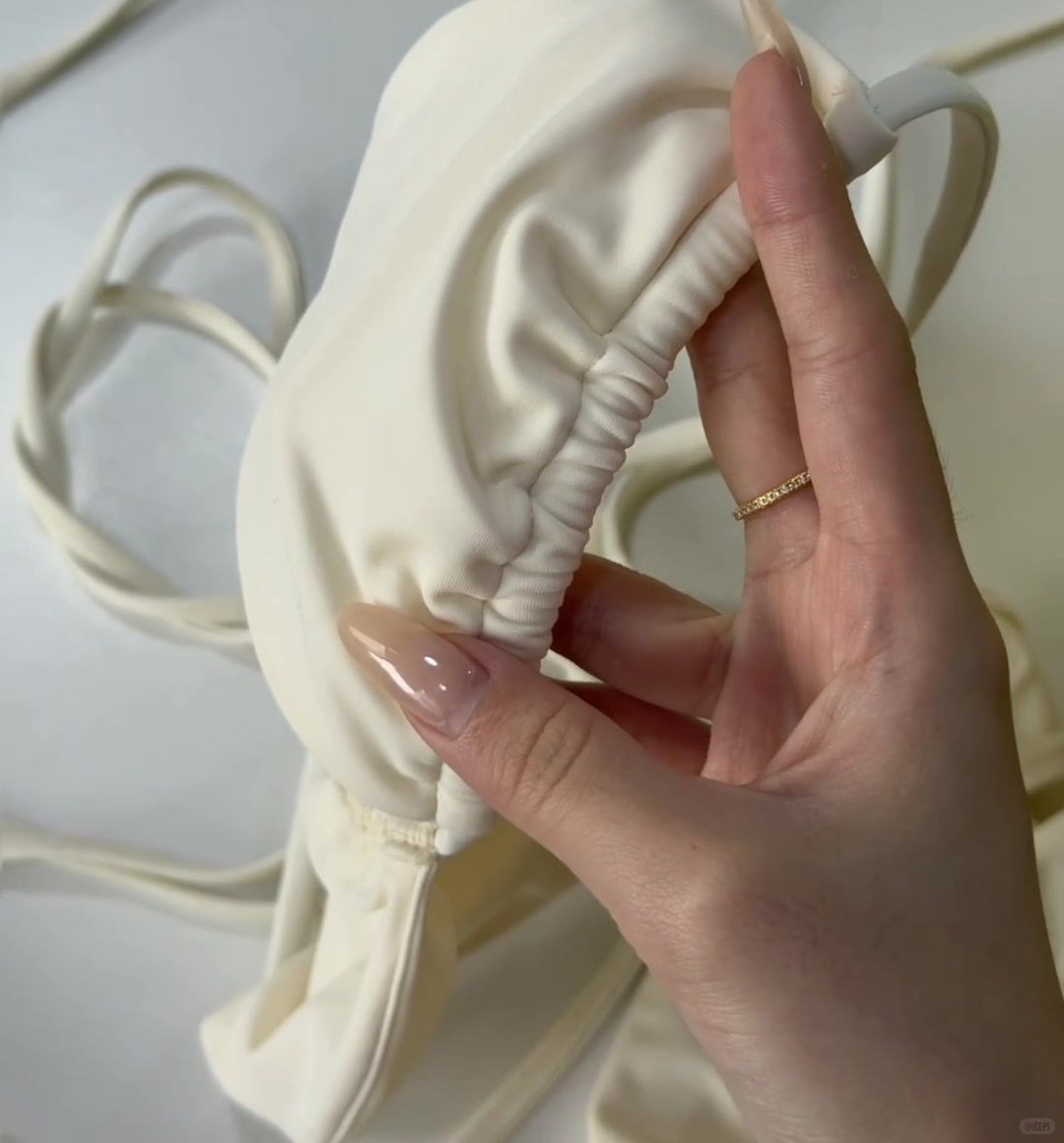
The close view shows a gathered garment edge, not a cup or underwire specification. Discuss lining extent, elastic tension, strap load and any additional support against the intended body range; check hidden components on the actual sample.
Options to discussCups, lining, mesh, elastic
Fit inputTarget body and size system
ReviewMovement, tension and recovery
Bulk controlApproved construction reference
Material route
Color, trims & branding
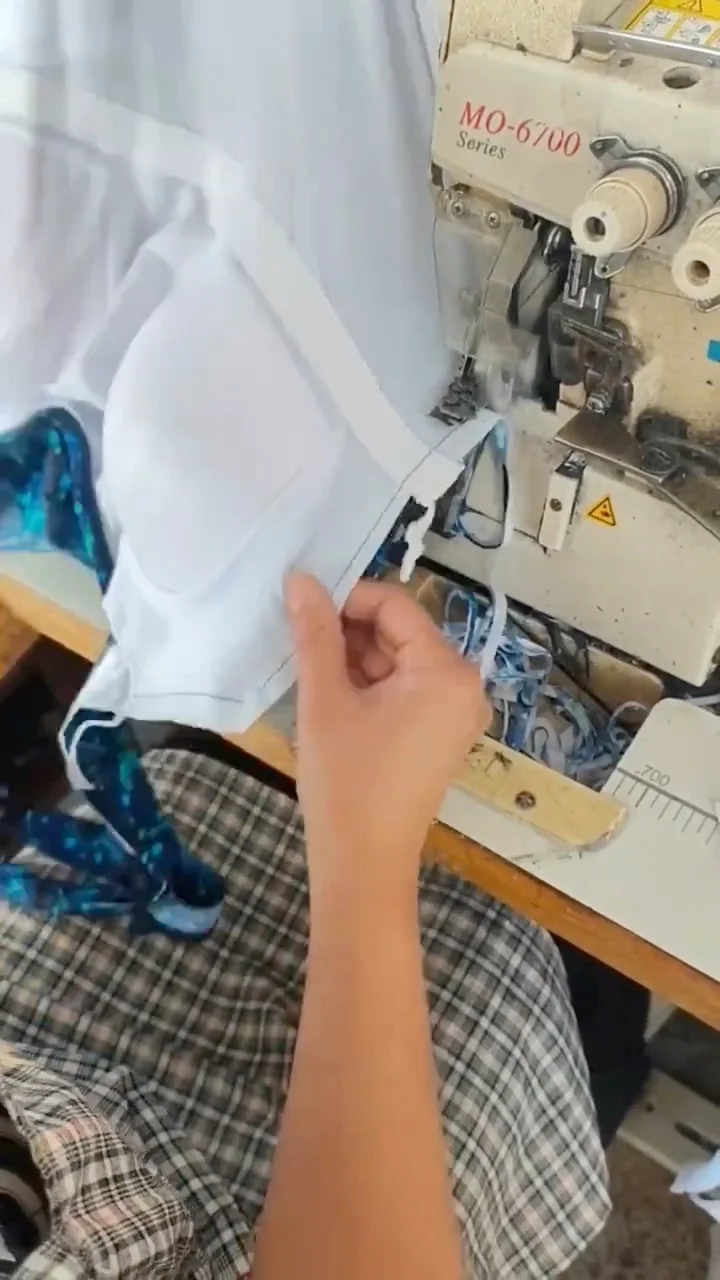
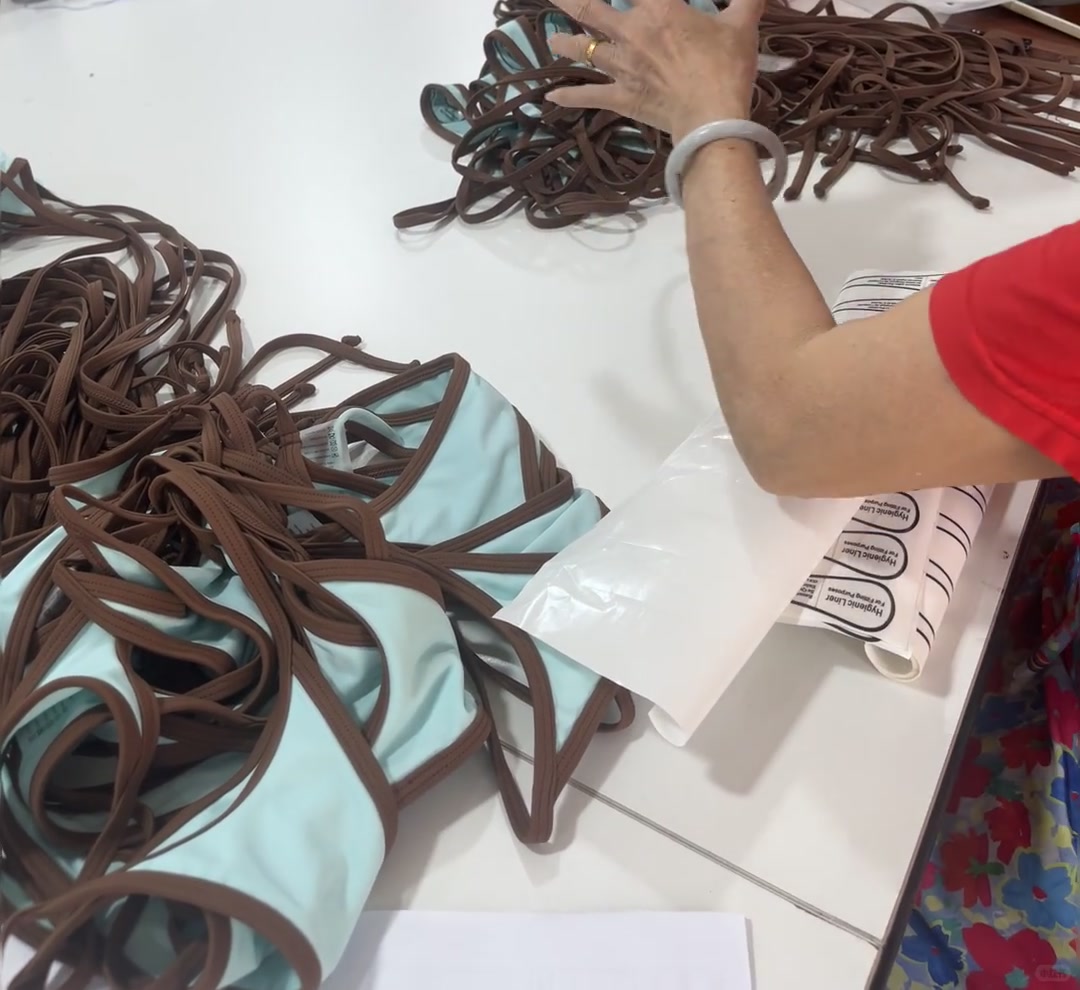
The photograph shows garment straps and components being trimmed. Define color standards and trim attachment separately from brand labels and packaging; approve each using its own artwork or physical reference.
Brand detailsMain, care and size labels
Trim reviewFinish, attachment and durability
PackagingDefined in the commercial brief
Color approvalPhysical swatch or agreed standard
Material decisions
Choose for the garment
you want to develop.
Compare physical alternatives using the same silhouette and target fit. A fiber name alone cannot specify opacity, support or stretch behavior.
| Buyer goal | Options to evaluate | Product impact | Approval input |
|---|---|---|---|
| A smooth silhouette | Smooth shell, lining weight and panel placement | Seam visibility, surface appearance and bulk | Sample worn in the intended fit size |
| More coverage | Shell shade, knit density and lining coverage | Opacity can differ by color, tension and wet condition | Actual color swatch and garment check |
| Comfortable movement | Stretch direction, lining stretch and elastic tension | Reach, edge pressure and fit after movement | Activity description and movement feedback |
| Texture or print | Surface texture, repeat scale and panel placement | Visual matching, cutting requirements and seam alignment | Physical swatch, artwork and placement drawing |
| A stated performance claim | A documented fabric or tested garment route | Testing scope must match the selected material and use | Supplier article, report scope and buyer requirement |
Send the references you have
Identify the intended use, silhouette, colors, target fit and any material article already chosen. If no article is selected, separate your required feel and coverage from preferences that can be explored.
Confirm shell and lining together
Record article reference, color standard, lining extent and any test evidence needed. The same shell paired with a different lining can require another sample review.
Material selection
Choose the pairing for the garment, not just the swatch.
A fabric decision includes the lining, color and stretch state of the finished style. Evaluate the combination during sampling.
Read about wet coverage →Appearance and coverage
Look at texture, print definition and coverage in the intended color. Dry and wet observations answer different questions.
Shell and lining compatibility
Discuss stretch direction, recovery and lining coverage together. A lining should be assessed within the actual construction, not as a separate guarantee.
Keep material references
Record the selected supplier code and specification when available. Revisit the sample if the material, lining or construction changes.